Follow up based on
what people actually did.
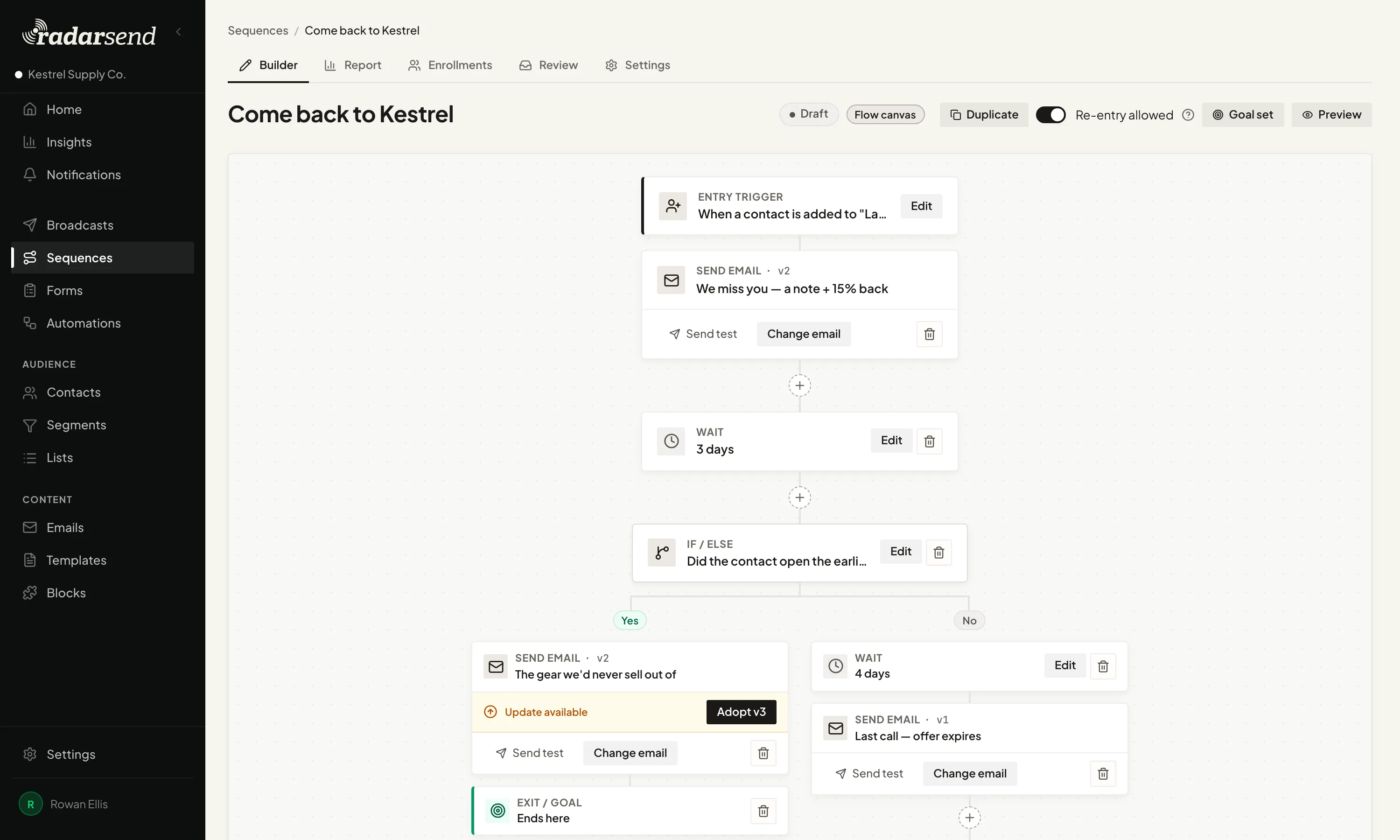
When something happens, start the sequence. Send an email. Wait. Check what the person did. Decide what happens next.
Welcome series, renewal reminders, and win-back emails that respond to what each person does.
Build the path. Test it before it runs.
A sequence reads from top to bottom. Send an email, wait, check whether someone clicked or visited a page, then take the next step. Update a field, change a stage, hand the contact to another sequence, or stop when a goal is reached.
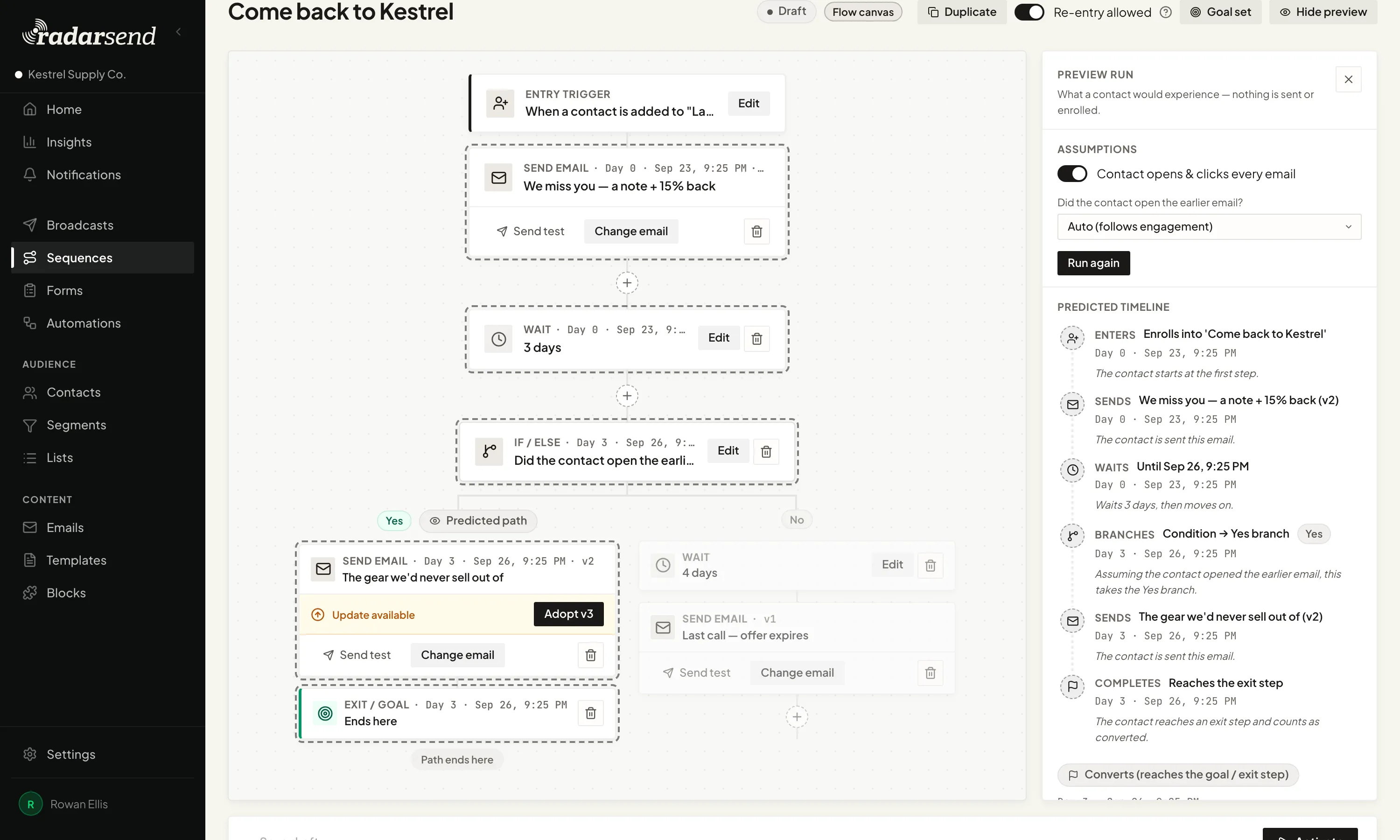
Before you turn it on, run a preview. Choose what the example contact does and RadarSend traces the path they would take, including when each step would happen. Change an assumption and run it again. Nothing is sent and nobody is enrolled.
See where everyone is and why.
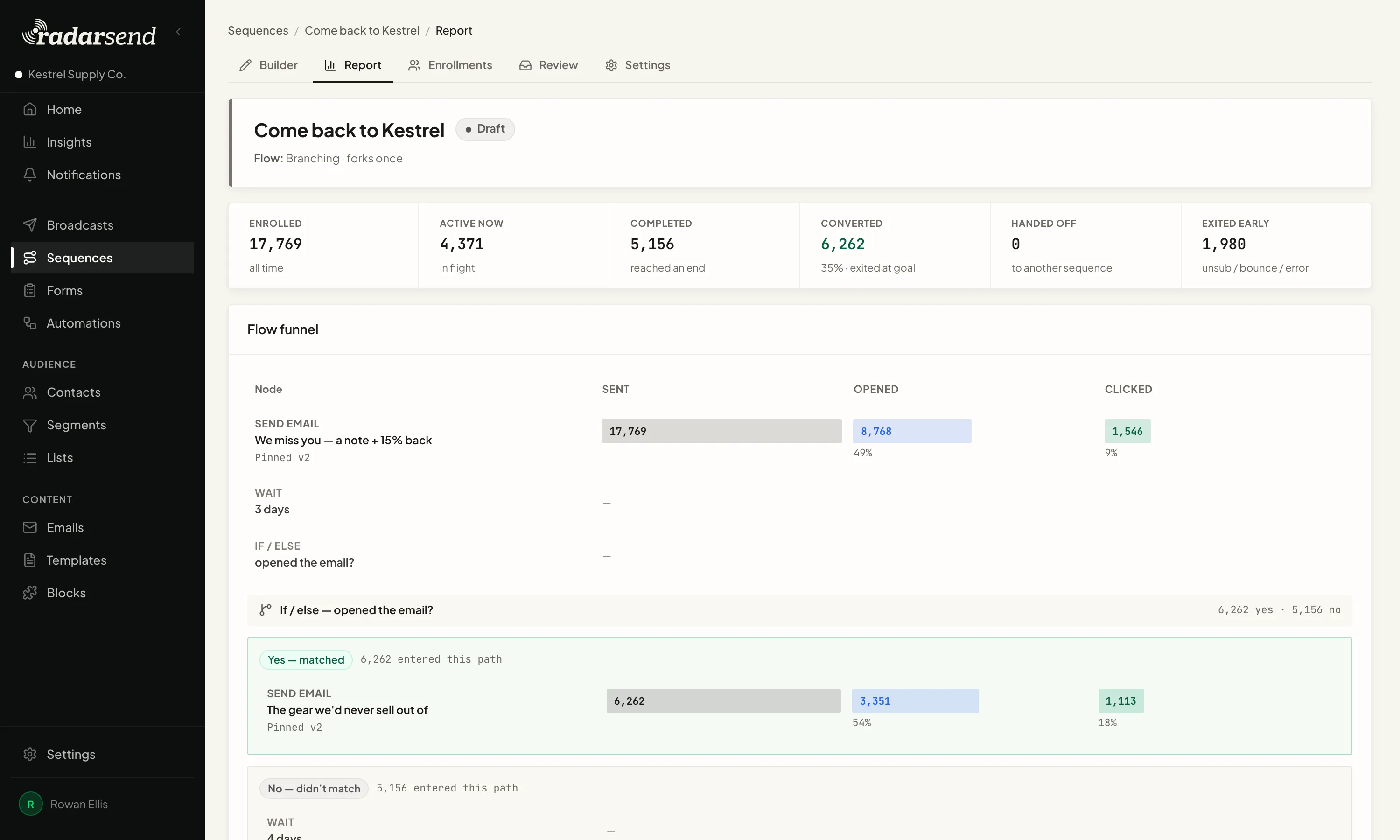
The report shows how many people are at each step, how many emails were opened and clicked, and who's still in the sequence, who finished, and who left early.
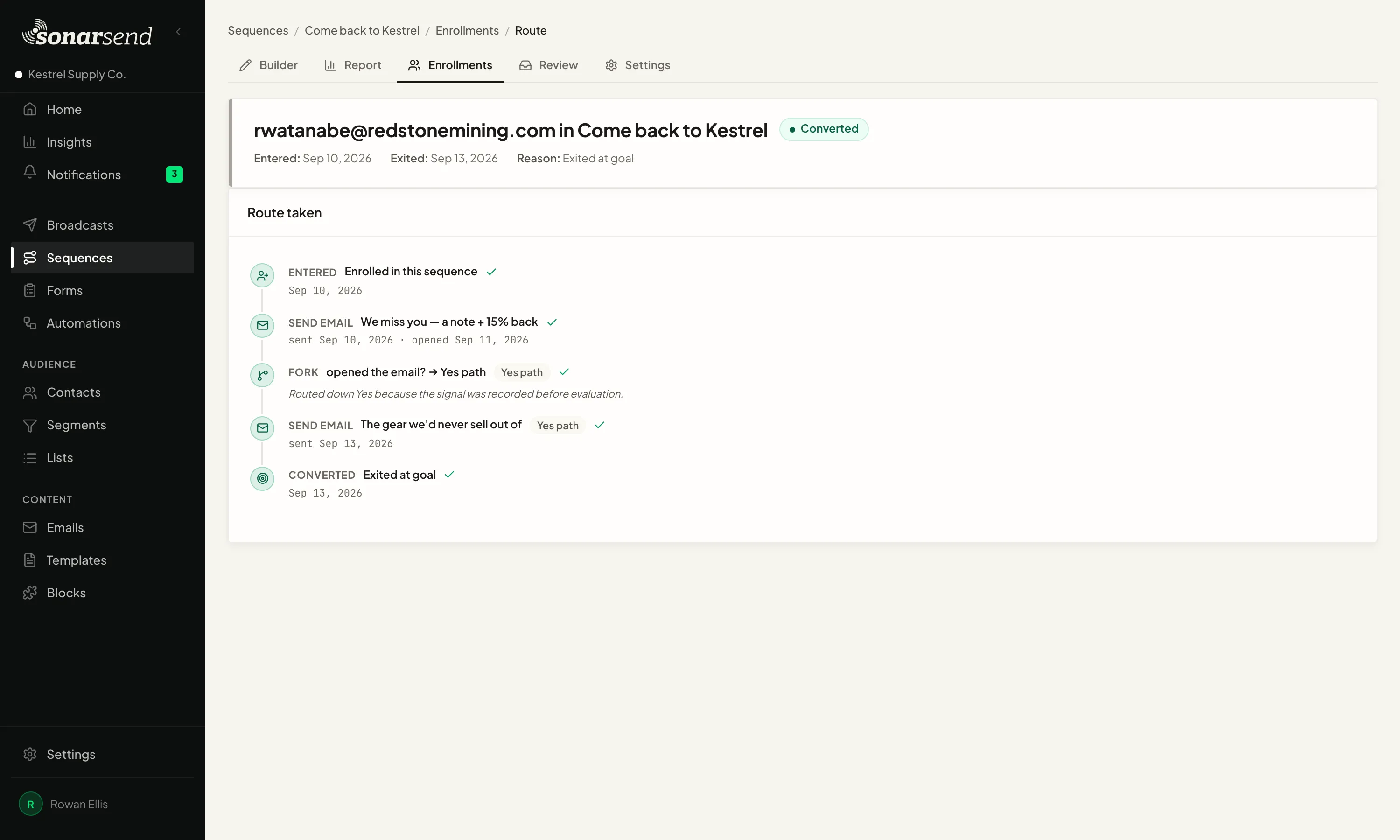
See exactly where each contact stands.
Open a contact's enrollment to see their status, when they entered, when they left, and the route they took. The emails, recorded engagement, branch choices, and outcome appear in order.
If the contact is waiting, see what they're waiting for and when the sequence will continue. If they reached a goal or left early, the reason is there too.
The sequence report gives you the totals. Enrollment detail gives you the story for one contact.
Not every job needs a sequence.
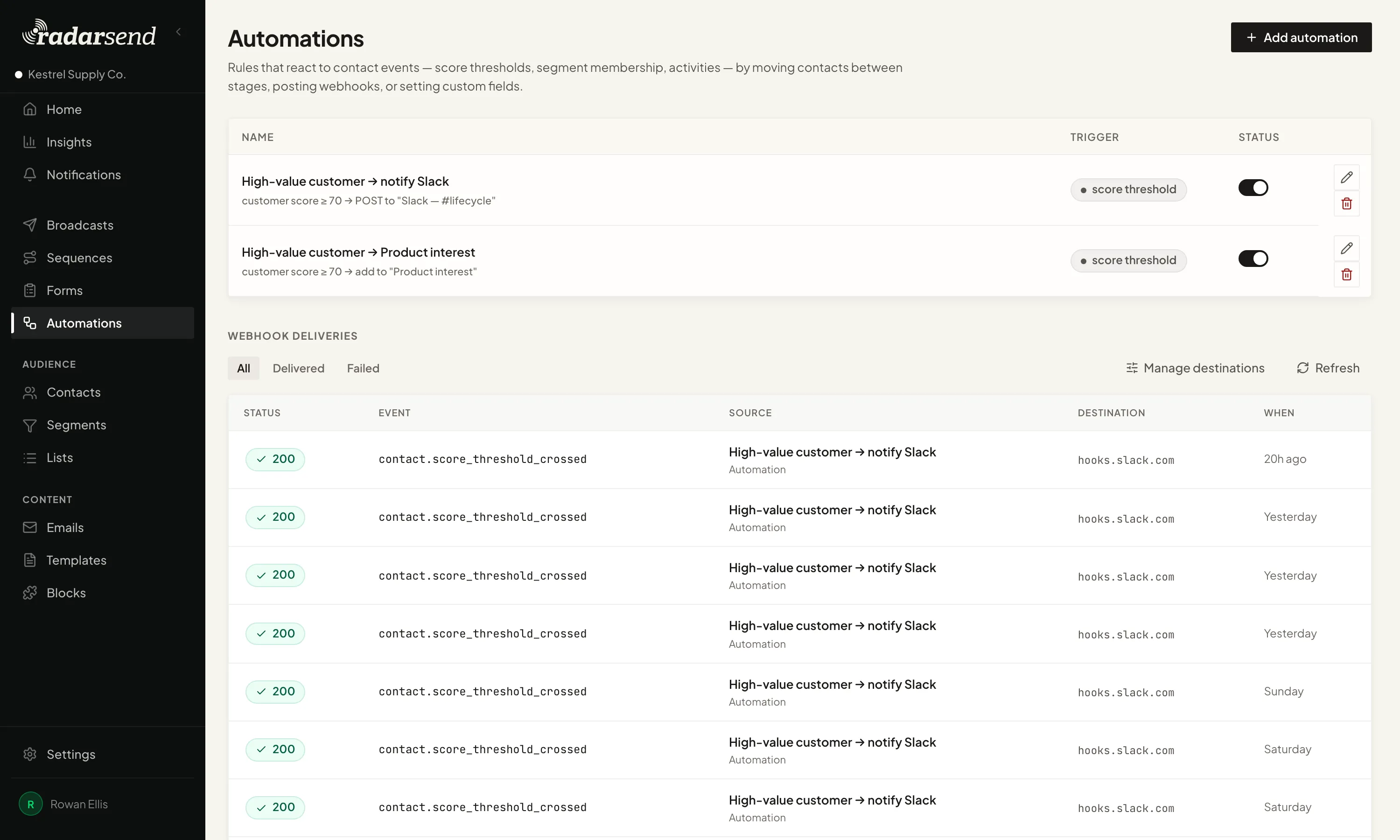
Sometimes the rule is simple. A customer's score crosses 70, so send a webhook that posts to your team's Slack channel. A contact does something important, so move them to a new stage or update a field.
For a one-step job, use a simple automation. Save sequences for follow-up with several steps.